
REVIEW · ANTIGUA GUATEMALA WALKING TOURS
Antigua Walking Tour Morning and Afternoon
Antigua is small, but the stories are not. This morning or afternoon 3.5-hour walking tour is a fast, friendly way to get your bearings and understand why Antigua looks the way it does, from its 1541 city plan to the repeated rebuilding after earthquakes. I like that the tour moves at a human pace, with a guide who can answer your questions along the way, including standouts like Armando and Moisés, both praised for their warmth and strong English.
My second favorite part is how the stops connect, so each plaza, church, and convent ruin makes sense instead of feeling like random sightseeing. You also end at the Mercado de Artesanías, which is convenient if you want to pick up crafts right after your walking loop. One thing to plan for, though, is that admissions are generally not included, and bottled water and coffee or tea are not provided.
In This Review
- Key things to know before you go
- Antigua, on foot: how the city plan and quakes shape what you see
- Starting at Café Condesa, then Plaza Central Park for real orientation
- Catedral de San Jose: a church built from layers of Santa Marta earthquake history
- Museo de Arte Colonial: a short stop that teaches you what to notice in Antigua
- Iglesia de San Francisco El Grande and the tomb of Pedro de San José de Betancur
- Concepción Convent ruin by the Pensativo River and Sister Juana de Maldonado
- Casa Santo Domingo Museums: baroque convent architecture with real wow-factor
- Mercado de Artesanías: end the walk with crafts and a Baroque-sismico facade story
- Price and value: what $27 buys you, and what you should bring
- Which kind of traveler should choose this walk
- Should you book this Antigua Walking Tour Morning and Afternoon?
- FAQ
- How much does the Antigua Walking Tour Morning and Afternoon cost?
- How long is the tour?
- Where does the tour start and where does it end?
- What is included in the price?
- Are admissions included?
- Does the tour provide bottled water or drinks?
- How large is the group?
- What is the weather requirement?
- What happens if it is canceled due to poor weather?
- Are there any restrictions on cancellation?
Key things to know before you go
- Start at Plaza Central Park for the 1541 grid lesson so you can read Antigua’s layout while you walk.
- Church stops focus on rebuilding after earthquakes, including the Santa Marta events and later quakes.
- Casa Santo Domingo is both museum and baroque architecture preservation, not just a quick look.
- Concepción Convent brings in Sister Juana de Maldonado and life inside a convent setting.
- Small group size, up to 15 people, helps you hear your guide and ask questions.
- You finish at Mercado de Artesanías, handy for souvenirs on the same ticket.
Boots on for the old capital: more Antigua Guatemala walks we have written up
- Private Walking tour of Antigua Guatemala
★ 4.5 · 40 reviews - Antigua Walking Tour Morning and Afternoon
★ 5.0 · 39 reviews
Antigua, on foot: how the city plan and quakes shape what you see
Antigua is one of those places where walking is the whole point. The streets and plazas are arranged with intention, and then centuries of earthquakes forced new construction, repairs, and sometimes total resets. That combination is what makes a focused walking route so satisfying, because you start seeing patterns, not just pretty facades.
On this tour, you are guided through some of the most important anchors, so you learn to spot what Antigua is telling you. Once you understand the grid and the rebuilding cycle, even a brief stop turns into a real story.
Starting at Café Condesa, then Plaza Central Park for real orientation
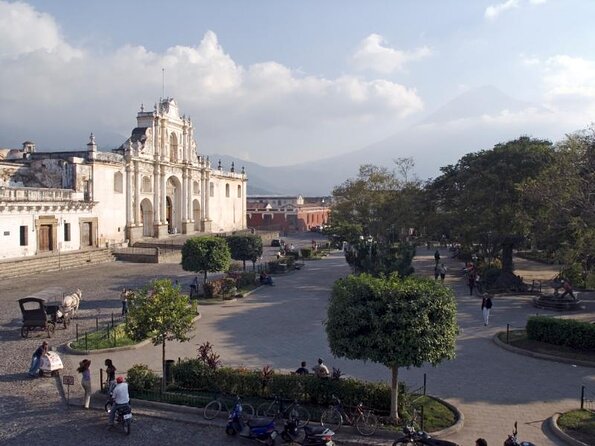
The tour starts at Café Condesa, La Casa del Conde on Avenida Norte 5a. From there, you head straight toward the Plaza Central Park, also known as Plaza Mayor, planned in 1541. This stop matters because it is your compass without needing a GPS.
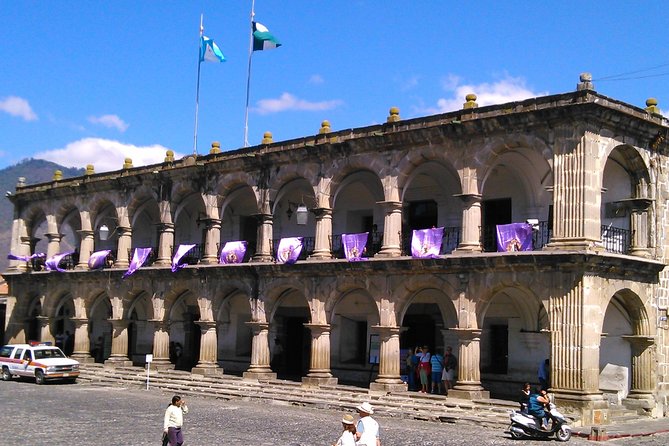
In the square, you get a concrete sense of how the city was organized: main buildings were planned around the central open area, and the square’s size is described with exact measurements. You will also hear how each side connects to major landmarks, like the portal of Chains and the town hall side, the Episcopal Palace and Cathedral side, and the Merchants Portal or Panaderas side. In the center, there is the Sirens fountain, built in 1739, a detail that often sticks in your mind as you keep walking.
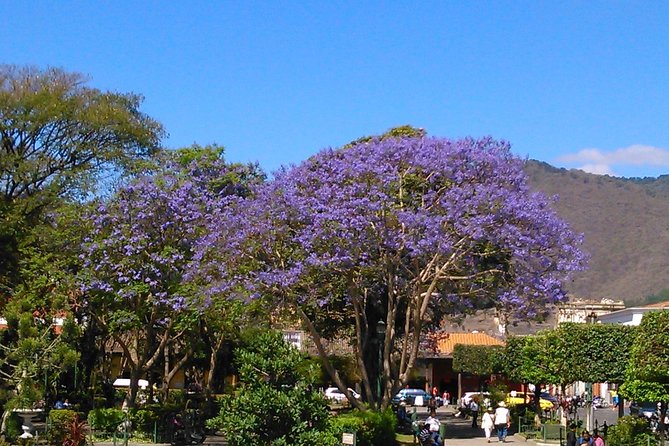
I also like that this stop includes living context. The plaza has five Esquisúchil trees planted around 1994, which gives you a reminder that Antigua is not just frozen in colonial time. It is a working city, and it still plants new life in historic spaces.
Time is tight here, about 20 minutes, so it is best as a quick orientation boost. If you want to linger long, you may need to do it on your own afterward, but as a first stop, it sets everything up.
Catedral de San Jose: a church built from layers of Santa Marta earthquake history
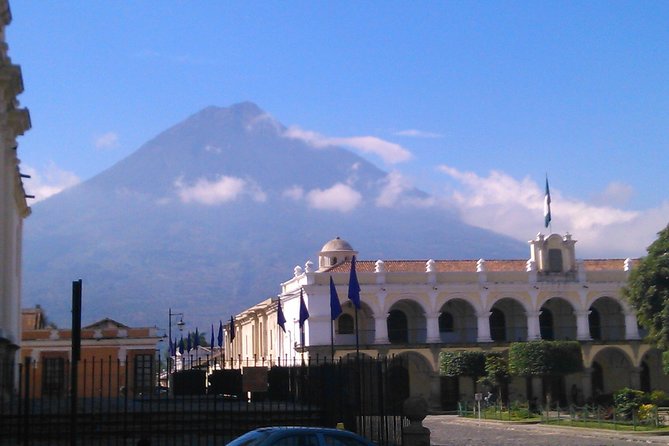
Next comes Catedral de San Jose. Even before you get inside (and with churches, you often get the most value from noticing the exterior and key details), the story behind the building is the point. The parish of San José is connected to the former Cathedral of Santiago de los Caballeros, which was destroyed by the Earthquakes of Santa Marta.
This is where the history becomes practical for your trip. The first cathedral building started in 1545 using debris brought from the Almolonga valley settlement, and construction was repeatedly interrupted by earthquakes. Then, after the temple was demolished in 1669, a second sanctuary was inaugurated in 1680, under the direction of Juan Pascual and José de Porres.
If you like “how do we rebuild after disaster” stories, you will get it here. There is also evidence that Spanish engineer and imager Martín de Andújar Cantos worked on reconstruction, and that helps explain why the final look feels like a mix of periods rather than a single moment in time.
This stop is about 20 minutes. It is enough to orient you on what Antigua’s religious architecture went through, without turning your walk into a full museum day.

Museo de Arte Colonial: a short stop that teaches you what to notice in Antigua
The tour then includes Museo de Arte Colonial. The big value here is not how long you spend, because the stop is about 5 minutes. Instead, it is the concept behind the museum and why it sits where it does in the broader Antigua story.
You learn about the University of San Carlos de Guatemala and its long timeline, including its roots in the Spanish colonial era and its status as Guatemala’s oldest and largest national university. The tour also references that this is the fourth university founded in America and connects it to the Royal and Pontifical University of San Carlos Borromeo period (1676 to 1829). After independence, it was called the Pontifical University.
I like short museum stops when I am on a walking route, because they teach you a viewing skill. Even in a few minutes, you can leave with a better eye for colonial influence and institutional power in Antigua, which shows up everywhere from churches to civic spaces.
Admissions are not included, so if you decide to go deeper inside (if open and available during your visit), you should expect to pay separately.
Iglesia de San Francisco El Grande and the tomb of Pedro de San José de Betancur
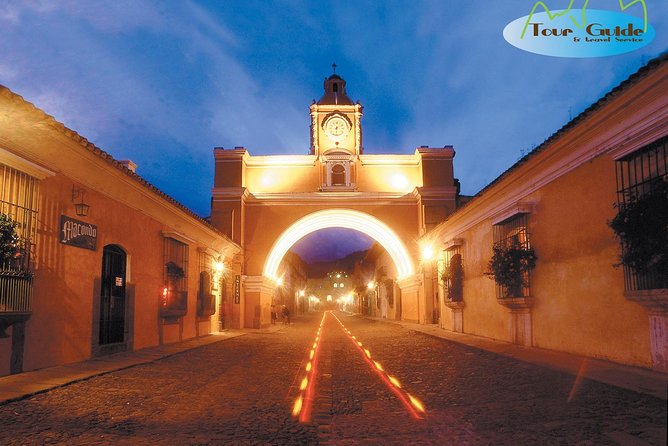
Iglesia de San Francisco El Grande is one of those stops where the architecture and the human story both matter. The sanctuary tradition started in the mid-16th century, but it suffered deterioration after an earthquake in 1565. The current church was built in 1702 by Diego de Porres, and then it faced multiple destructions from earthquakes in 1717, 1751, and 1773.
That repeated earthquake pattern can feel heavy, but it is also what gives Antigua its identity. Each time, the church was abandoned or damaged, and then later rebuilt. You will hear that after being abandoned, damage continued through earthquakes in 1874 and 1917, and then the church was rebuilt in the second half of the 20th century after regular orders could again hold ownership in Guatemala. Franciscans returned to the complex in 1967.
The human detail that usually makes this stop stick is the tomb of Pedro de San José de Betancur, a missionary from Guatemala and recognized as a saint of Spanish origin. When you know the quake history and the saint story, the visit feels less like a photo opportunity and more like a stop with meaning.
Plan on about 20 minutes. If you are interested in religious art and saints, it is worth being present and slow for a couple minutes, even if the group keeps moving.
Concepción Convent ruin by the Pensativo River and Sister Juana de Maldonado
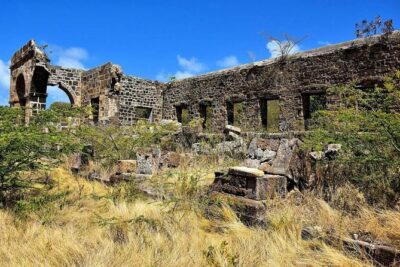
Then you move to the Concepción Convent, a ruined complex and a notable Antigua attraction. This is one of those stops where you get the most value from looking carefully rather than trying to read everything.
The convent sits on the banks of the Pensativo River, and the tour connects it to Sister Juana de Maldonado, a poet and a controversial historical figure. She is described as an urban nun who professed in the convent during the first half of the 17th century. That detail gives the ruins a sharper identity, because you stop thinking of it as just old stone and start imagining the people who lived in that space.
Because this is a ruined site, you may not get the same indoor experience you get with functioning churches. Still, it is a powerful stop for context, especially if you have been wondering why so many parts of Antigua feel both sacred and damaged.
Casa Santo Domingo Museums: baroque convent architecture with real wow-factor
Next is Casa Santo Domingo Museums, located at Hotel Casa Santo Domingo. This is a former Convent of Santo Domingo and is described as one of the largest convents in America. The setting alone is a reason to pay attention, because you are not just looking at a museum, you are in (or next to) the surviving baroque bones of the convent.
The hotel opened in June 1989, and the tour frames Casa Santo Domingo as a place that preserves baroque architecture from the colonial era, along with treasures displayed from that time. This is also where the information about distance becomes useful for planning: it is about 10 minutes walking from central park in Antigua, and roughly 45 km from Guatemala City, around 50 minutes by drive.
On this tour, you spend about 30 minutes here, which is a comfortable middle ground. It is long enough to see more than one room or section, but short enough that you do not feel behind. If you care about colonial design, religious architecture, and the way a convent can evolve into a museum setting, this is typically the strongest stop for “I will remember this.”
Admissions are not included, so build in extra time in case you want to go inside more than you expected.
Mercado de Artesanías: end the walk with crafts and a Baroque-sismico facade story
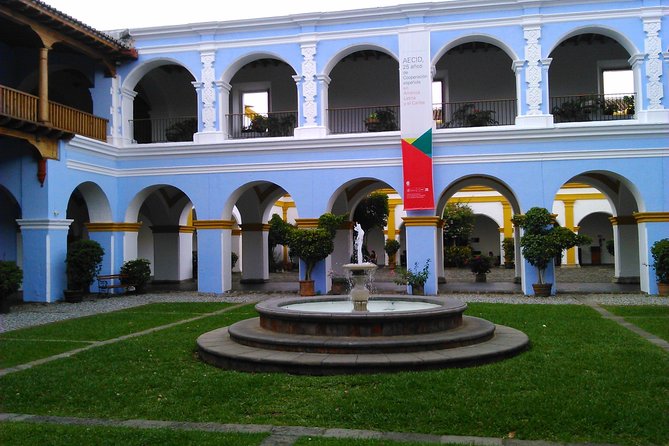
Your route ends at Mercado de Artesanias. It is a smart finishing move because you can turn sightseeing energy into practical browsing right away. The stop is about 30 minutes, and it is also where you can shop without needing a second trip across town.
The tour’s shopping time is also paired with a nearby architectural story related to the Iglesia de Nuestra Señora del Carmen. Even though it is not explained as a full visit here, you learn why it is called the Iglesia del Carmen and why the facade became famous. After the Santa Marta earthquakes destroyed the church in 1773, the facade remained in relatively good condition, admired as an example of barroco sísmico guatemalteco, and then the name carried forward after the Carmelite nuns relocated.
This is the kind of context that makes a market stop feel more than just commercial. You are still learning how Antigua survived disaster, even when you are looking at crafts and souvenirs.
The tour information says this stop is free for admission, and it is a good place to buy small items you can carry easily.
Price and value: what $27 buys you, and what you should bring
At $27 per person for about 3 hours 30 minutes, you are buying a guided route that strings together the city’s most important landmarks in a manageable loop. What I consider strong value here is not just the list of sites, but the logic connecting them, from the 1541 plan to the Santa Marta earthquake impacts and later rebuilding.
What is included is straightforward: a tour guide. What you should plan for is not included: bottled water, coffee or tea, and admissions.
Here is how I would handle that on a real day:
- Bring your own water bottle if you tend to get thirsty on walks.
- If you want museum or church interior time, expect to pay separate admission fees where required.
- Wear shoes you trust. Antigua’s sidewalks are historic, not designed for modern comfort.
Group size is capped at a maximum of 15 people. That matters because you usually get better communication with your guide, and it is easier to hear instructions without shouting over crowds.
One more practical note: the tour requires good weather. If conditions are poor, you are offered a different date or a full refund, so you do not get stuck with a wasted day.
Which kind of traveler should choose this walk
This tour is a great fit if you want two things at once: quick orientation and meaningful context. If you are spending only a day or two in Antigua, this style of walk can help you understand what to look for on your own later. If you enjoy architecture and history, you will appreciate the specific earthquake timelines and the way each building’s story is explained in plain language.
It also works well for people who prefer guided structure. You get a natural path from plaza to churches to convent ruins to a museum stop, then a practical finish at a market.
If your style is slow travel with long museum hours and deep stays inside every site, you might find 3.5 hours a bit tight. In that case, treat this as your “get oriented first, go back later” plan.
Should you book this Antigua Walking Tour Morning and Afternoon?
Yes, I think you should book it if you want an efficient, high-impact way to understand Antigua without feeling rushed. For $27, you get a guided route with small-group attention, clear landmark choices, and a logical ending point for souvenirs.
I would book it especially if you like guides who can make details click, and if you have heard names like Armando or Moisés mentioned for both charm and strong English. The main reason to hesitate is admissions and food drinks being on you, plus the dependence on good weather. If you plan for those, you will likely end the tour feeling like you truly understand Antigua’s layout, not just that you saw a lot of buildings.
FAQ
How much does the Antigua Walking Tour Morning and Afternoon cost?
The price is $27.00 per person.
How long is the tour?
The duration is approximately 3 hours 30 minutes.
Where does the tour start and where does it end?
It starts at Café Condesa, La Casa del Conde, Avenida Norte 5a, Antigua Guatemala, and it ends at Mercado de Artesanias on 3a Avenida Nte., Antigua Guatemala.
What is included in the price?
The tour guide is included.
Are admissions included?
No. Admissions are not included, though one of the stops lists free admission.
Does the tour provide bottled water or drinks?
No. Bottled water, and coffee or tea are not included.
How large is the group?
The maximum group size is 15 travelers.
What is the weather requirement?
The experience requires good weather.
What happens if it is canceled due to poor weather?
If it is canceled due to poor weather, you will be offered a different date or a full refund.
Are there any restrictions on cancellation?
Cancellation is free up to 24 hours in advance for a full refund. If you cancel less than 24 hours before the start time, the amount you paid is not refunded.
More Guatemala Tours
- Scenic Full Day Tour of Antigua★ 5.0 · 472 reviews
- Lake Atitlan One Day Tour from Antigua★ 4.5 · 288 reviews
- Coffee and Gastronomic Bike Tour in Antigua★ 5.0 · 284 reviews
- Adventure Antigua – Eli’s Original Eco Tour★ 4.5 · 238 reviews
- Antigua Round Island Tour★ 4.5 · 226 reviews
More Guatemala Reviews
- Adventure Antigua – The Xtreme Circumnavigation★ 5.0 · 959 reviews
- Hike to Pacaya Volcano from Antigua★ 4.5 · 502 reviews
- Scenic Full Day Tour of Antigua★ 5.0 · 472 reviews
- Snorkel – Lobster Lunch Cruise to Bird Island and Paradise Reef★ 5.0 · 438 reviews
- Lake Atitlan One Day Tour from Antigua★ 4.5 · 288 reviews
More Antigua Guatemala Walks
- Walk Antigua Like a Local★ 5.0 · 53 reviews
- Private Walking tour of Antigua Guatemala★ 4.5 · 40 reviews
Recently reviewed: more ways to spend a day in Guatemala



Antigua Guatemala Walking Tours that cover the same ground.
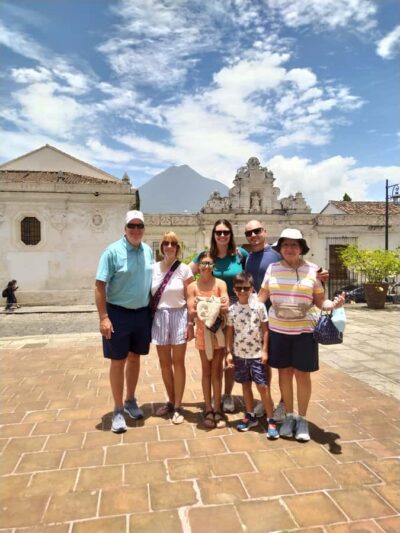 ★ 5.0Antigua Guatemala: City Highlights Guided Walking TourFrom $25462 reviews
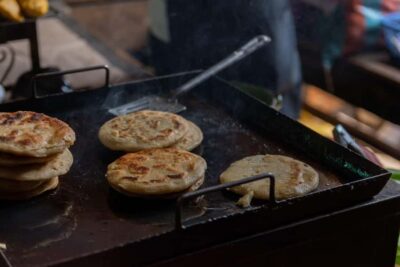 ★ 4.8Antigua Guatemala: Street Food Walking Tour with TastingsFrom $6887 reviews
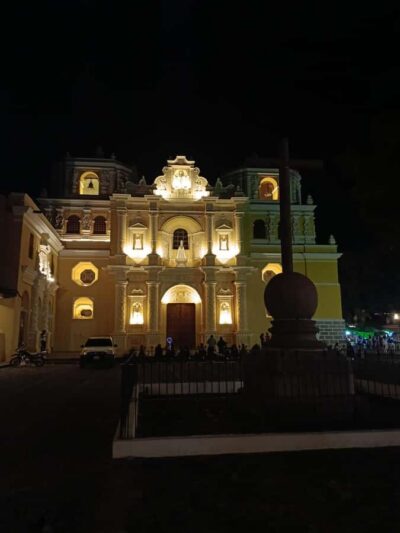 ★ 4.9La Antigua Horror Stories Night Walking TourFrom $2574 reviews
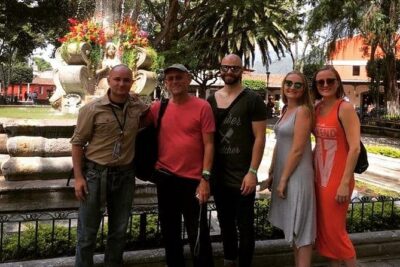 ★ 5.0Walk Antigua Like a LocalFrom $3253 reviews
 ★ 4.5Private Walking tour of Antigua GuatemalaFrom $3640 reviews
★ 4.8Walk Antigua Like a LocalFrom $3529 reviews
★ 4.5Private Walking tour of Antigua GuatemalaFrom $3640 reviews
★ 4.8Walk Antigua Like a LocalFrom $3529 reviews
Also on these pages