
REVIEW · ANTIGUA GUATEMALA WALKING TOURS
Walk Antigua Like a Local
Antigua is best learned on foot. This small-group walk hits major sights fast, with real local context instead of just looking at stones. I love how the route mixes big-name landmarks with stories you would miss alone, and I also like that you get a food and drink stop that feels tied to Guatemala, not touristy.
You will see Antigua’s colonial core in one half-day: the Plaza Central area, key churches, the Santa Catalina Arch, and then you shift to chocolate and jade. One thing to consider, though, is that you’ll be walking a lot in a compact route, so good shoes matter, especially if the ground is uneven or a morning turns warm.
In This Review
- Key things that make this walk work
- Why a morning walk feels like the best Antigua plan
- Starting at Casa de la Mandarina, with an easy meeting point
- Plaza Central Park, where Antigua breathes
- Iglesia de San Francisco El Grande and the Betancur tomb
- Casa Santo Domingo, where a convent becomes a museum-hotel
- La Iglesia de la Merced: Baroque beauty with quake-proof design
- The Santa Catalina Arch: the yellow photo magnet with a real job
- Choco Museo: cacao history, then samples you can taste
- Jade in Guatemala: a symbol with a long paper trail
- The included beer tasting, bottled water, and how to plan lunch
- Value check: is $32 a fair deal for this route?
- Who should book, and who should think twice
- Should you book Walk Antigua Like a Local?
- FAQ
- How long is the tour?
- Where do you meet, and does it end nearby?
- What is the price per person?
- What is included in the tour?
- Is lunch included?
- What are some of the stops you will visit?
- What happens if the weather is bad?
- Are service animals allowed?
Key things that make this walk work
- A tight 3 to 4 hour loop through Antigua’s core, ideal when you only have a morning or two.
- Local guide insight that explains what you are seeing, not just where it is.
- Major photo stops like the Santa Catalina Arch and low-profile bell towers at La Merced.
- Chocolate education plus tastings at Choco Museo, including flavors like cardamom and cinnamon.
- Jade symbolism and origin tied to Guatemala’s jadeite deposits.
- Small group size (max 15), so questions get answered instead of ignored.
Boots on for the old capital: more Antigua Guatemala walks we have written up
- Private Walking tour of Antigua Guatemala
★ 4.5 · 40 reviews - Antigua Walking Tour Morning and Afternoon
★ 5.0 · 39 reviews
Why a morning walk feels like the best Antigua plan
Antigua can overwhelm you fast. You arrive, you see churches and arches everywhere, and it is easy to bounce from one photo spot to the next without really understanding the why.
This tour is built to fix that. You start in the center and keep moving through the historic religious and civic core, so the city makes sense as you go. The guide adds the missing links, like how earthquakes shaped the architecture and how convent life influenced the layout of buildings.
It is also a smart value format. At $32 per person for roughly 3 to 4 hours, you are not just paying for walking. You are paying for guided orientation, the entry fees that do apply, and tasting moments that would take extra time to plan on your own.
Starting at Casa de la Mandarina, with an easy meeting point
You meet at Casa de la Mandarina, 2a Calle Poniente 2, Antigua Guatemala (right in the historic zone). The tour starts at 9:00 am and ends back at the meeting point, so you do not have to figure out a second drop-off.
That matters because Antigua mornings are when the streets are more manageable. You can get set for the day without losing time in transit. The tour is also designed to be near public transportation, which helps if you are staying close enough to walk partway and then hop on a bus for the rest.
In reviews, people highlight the guides by name, and that is usually a good sign. Guides like Roberto, Felix, Estevan, Carlos, Tony, and Manuel Barrios are praised for being friendly, organized, and flexible. Some tours also get a fun bonus, like a ride on the local chicken bus and a walk through market areas.
Plaza Central Park, where Antigua breathes
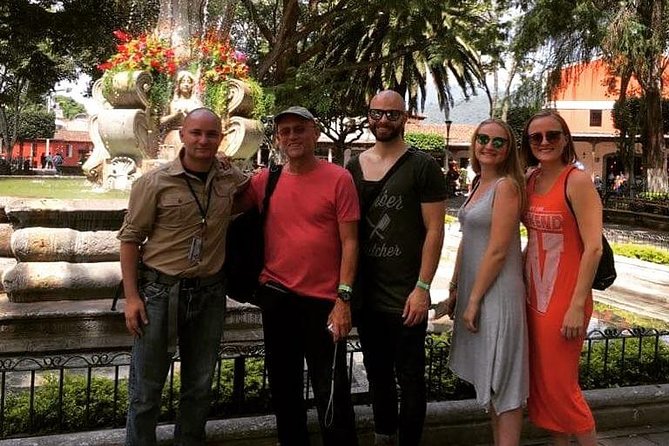
Your first stop is the Plaza Central area. This is the city’s town square, surrounded by key civic and religious buildings, including the municipal building, the Palace, and the cathedral zone. During colonial Spanish times, it became a principal meeting point and place of reference, and you still feel that role today.
What I like about starting here is how fast it gives you bearings. Even if you only spend about 20 minutes here, you learn the rhythm of Antigua: where people gather, where the best foot traffic flows, and how the day moves around the square.
If you want a practical mini-goal for this stop, it is simple. Take five minutes to watch where locals line up, how vendors set up, and where cafés spill onto the plaza. That gives you a pattern to follow for the rest of your day.
On weekends, it livens up more, so if your schedule allows, you might pick a Saturday or Sunday for extra energy.

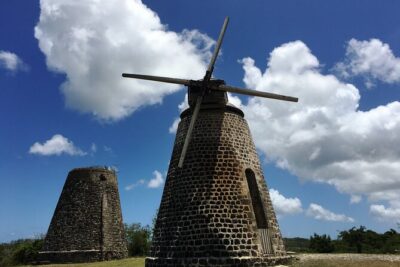
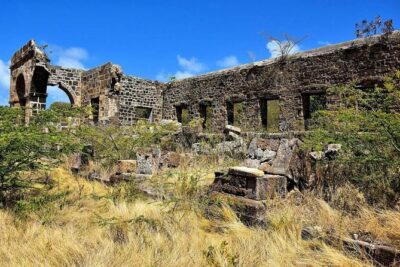
Iglesia de San Francisco El Grande and the Betancur tomb
Next you head to Iglesia de San Francisco El Grande, a restored colonial church with a complicated past. The church was abandoned and then damaged by the region’s major earthquakes in 1874 and 1917. Later, restoration efforts restarted in the twentieth century, after the Guatemalan state allowed the regular orders to have property again.
This stop has a special hook: you visit the tomb of Pedro de San José de Betancur, the only Saint of Guatemala. He was a Franciscan monk who founded a hospital for the poor in Antigua, and that social-care piece is part of what makes the church feel more than just beautiful architecture.
You’ll also notice the way restoration is handled. A lot of tourists see a rebuilt church as a straight line from past to present. Here, it is more nuanced: restoration focused on structural health and rebuilding work, with the Franciscans returning in 1960 and beginning a controversial restoration process.
One consideration: admission is not included for this stop. If you prefer fully pre-paid itineraries, budget a little extra for that church visit.
Casa Santo Domingo, where a convent becomes a museum-hotel
After the churches of the center, you shift to Casa Santo Domingo. In the seventeenth century, the Convent of Santo Domingo was one of the largest in America. Then the Santa Marta earthquake destroyed it almost entirely in 1773, and what comes next is the story of how Antigua rebuilt itself again.
Today, the space you visit is described as Convent-to-concept: Hotel Museo Spa Casa Santo Domingo. Each corner is treated like a page that joins into a longer historical chapter.
This is a smart stop for first-timers because it changes the pace. Instead of only exterior facades and arches, you get a “history through space” moment. Even if you do not want to tour every room in depth, you still come away with a clearer sense of what made convent life so influential in colonial Antigua.
Admission for this stop is listed as free in the tour details, which is a nice bonus.
La Iglesia de la Merced: Baroque beauty with quake-proof design
La Iglesia de la Merced is one of Antigua’s key baroque landmarks. What stands out here is not only the look of the church, but its practical design choice: the two bell towers are unusually low in height.
That low profile was an intentional feature meant to survive the frequent earthquakes that affect the region. You are not just admiring style. You are seeing local architecture respond to local risk.
This is the kind of stop where a guide really earns their keep. Without context, you might assume the towers are simply old or weathered. With context, you understand they are functional design, and that makes the architecture feel smarter and more human.
If you like photography, this is a great stop to frame the church in a way that shows the short towers and the baroque lines.
The Santa Catalina Arch: the yellow photo magnet with a real job
Then you arrive at the Santa Catalina Arch, one of the most iconic landmarks in Antigua. It was built in the seventeenth century to connect the Santa Catalina Convent to a school. The idea was practical: cloistered nuns could move between buildings without going outside.
That detail changes how you look at the arch. You may see it first as a classic yellow photo backdrop. After the explanation, you see it as a piece of movement control for a community that needed separation from street life.
On clear days, Volcán de Agua can create a dramatic backdrop. You cannot control the weather, but the guide can help you spot the angles that work best when skies cooperate. If you care about photos, aim to take your first shots early, before the light changes or crowds thicken.
Choco Museo: cacao history, then samples you can taste
The tour shifts from architecture to food at the Chocolate Museum, also known as Choco Museo. This stop is about cacao as a crop and as culture.
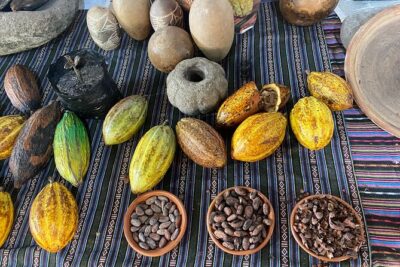
You learn about the history of cacao, the cacao tree, and how cacao mattered in Guatemala. Then you move into the tasting side, because Choco Museo features its own artisanal chocolate factory that produces chocolate from organic Guatemalan cacao beans.
You sample a range of chocolates, starting with pure dark chocolate and then branching into blends with local flavors. The flavors listed include cardamom, cinnamon, and coffee.
This is where I think the tour feels extra good value. You are paying for guided explanation and access to tasting. If you tried to recreate the day on your own, you would still need time to find the right place, choose what to taste, and learn the story behind it. Here, you get that in one appointment.
Two practical tips:
- Come hungry-ish, but not starving, since chocolate tasting can become heavy fast.
- If you have a sweet tooth, slow down and compare flavors, rather than rushing through samples.
Jade in Guatemala: a symbol with a long paper trail
Next up is jade. The tour introduces why jade matters across time. Jade has been used for over 5,000 years in both China and Mesoamerica to create objects from ornaments and utensils to tools and even weapons.
The tour also connects jade to symbolism. It is often described as a good luck charm and recognized as the stone of eternal life, abundance, and hope. In the cultural lens shared here, jade represents strength and meaning, so it becomes a natural material for decoration, defense, and hunting.
Guatemala is also highlighted as one of only four countries in the world with deposits of jadeite. That matters because it explains why jade is not just an imported “pretty stone” in this region.
This stop is short on purpose. It is meant to add cultural texture to a day that started with churches and ended up in tastings. If you like crafts, jewelry, or cultural symbolism, you will enjoy the meaning behind what you might otherwise treat as a souvenir.
The included beer tasting, bottled water, and how to plan lunch
Included in the tour are bottled water and alcoholic beverages, specifically an artisanal beer tasting with taxes. That means you are not just doing sightseeing. You get a small, planned break that keeps the day from turning into nonstop walking and looking.
Alcohol is included, but lunch is not. So you will want to plan food for after the tour ends, since you are back at the meeting point and can choose from nearby options.
In reviews, people say guides give practical tips about where to eat and how to handle small tasks like ATM use. That is a real benefit for a first-time visit because Antigua has plenty of options, but you do not want to waste your best afternoon searching.
If you do not drink alcohol, you should still be fine because the tour includes water, but you may want to confirm how the beer tasting is handled for non-drinkers at booking.
Value check: is $32 a fair deal for this route?
For $32, the tour packs in a lot of “decision work” for you. You get:
- A set half-day route through central Antigua
- Multiple major sights that most first-timers want
- Entry for some stops, with fees and taxes handled
- Bottled water
- A beer tasting
- A chocolate stop with sampling
- A jade stop focused on meaning
The biggest value driver is the guide. Several named guides in feedback, like Roberto and Felix, are praised for being flexible and adapting the tour to what people want, even swapping in additional interests. One person notes practical guidance such as ATM tips and where to eat, and that kind of help often saves more time than the tour length itself.
Is it perfect? If you want a slow, unhurried tour of fewer places, this might feel like more ground than you want in one go. But if you want to get your bearings fast and understand the city’s big themes, it is a strong way to start.
Who should book, and who should think twice
This tour is ideal for:
- First-timers who want a grounded intro without spending hours researching
- People who like architecture plus stories behind it
- Food curious travelers who want chocolate tasting, not just a chocolate purchase
- Budget-minded visitors who still want guided access
It might not be your best fit if you:
- Want a full day of one area with minimal walking
- Hate churches or prefer non-religious experiences only
- Want lunch included, since this tour does not include it
Also, because the tour walks a lot, you should expect uneven sidewalks at points. Reviews mention this indirectly through the repeated call for good shoes.
Should you book Walk Antigua Like a Local?
If you are in Antigua for a day or two, I think this is an easy yes. It is built for orientation, and it uses a small-group format so you can ask questions and actually connect the dots between the streets, the buildings, and the quake-scarred resilience of the region.
Book it if you want:
- A smart half-day plan starting at 9:00 am
- Major sights like La Merced and the Santa Catalina Arch
- A cacao and jade stop that adds cultural context
- Included bottled water and a beer tasting
Skip it only if you hate walking, or if you already know Antigua’s key history and want a deeper, specialized tour in one narrow theme.
If your schedule allows, wear comfortable shoes, bring a camera, and come ready to listen. You’ll leave with Antigua that makes sense, not just Antigua that looks good in photos.
FAQ
How long is the tour?
The tour runs about 3 to 4 hours.
Where do you meet, and does it end nearby?
You meet at Casa de la Mandarina, 2a Calle Poniente 2, Antigua Guatemala 03001, and the tour ends back at the meeting point.
What is the price per person?
The price is $32.00 per person.
What is included in the tour?
The tour includes all fees and taxes, bottled water, and an artisanal beer tasting (with taxes).
Is lunch included?
No, lunch is not included.
What are some of the stops you will visit?
The tour includes Antigua’s town square area (Plaza Central Park), Iglesia de San Francisco El Grande, Casa Santo Domingo Museums, La Iglesia de la Merced, the Santa Catalina Arch, the Chocolate Museum, and a jade stop.
What happens if the weather is bad?
This experience requires good weather. If it is canceled due to poor weather, you will be offered a different date or a full refund.
Are service animals allowed?
Yes, service animals are allowed. The tour also says most travelers can participate.
More Guatemalan Town Walks
- Private Walking tour of Antigua Guatemala★ 4.5 · 40 reviews
- Antigua Walking Tour Morning and Afternoon★ 5.0 · 39 reviews
More Guatemala Reviews
- Adventure Antigua – The Xtreme Circumnavigation★ 5.0 · 959 reviews
- Hike to Pacaya Volcano from Antigua★ 4.5 · 502 reviews
- Scenic Full Day Tour of Antigua★ 5.0 · 472 reviews
- Snorkel – Lobster Lunch Cruise to Bird Island and Paradise Reef★ 5.0 · 438 reviews
- Lake Atitlan One Day Tour from Antigua★ 4.5 · 288 reviews
More Antigua Guatemala Walks
- Private Walking tour of Antigua Guatemala★ 4.5 · 40 reviews
- Antigua Walking Tour Morning and Afternoon★ 5.0 · 39 reviews
Recently reviewed: more ways to spend a day in Guatemala



Antigua Guatemala Walking Tours that cover the same ground.
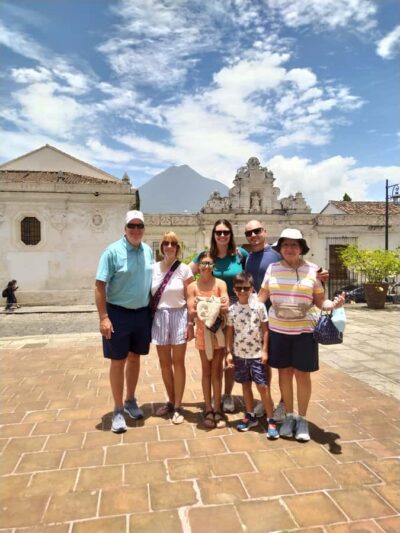 ★ 5.0Antigua Guatemala: City Highlights Guided Walking TourFrom $25462 reviews
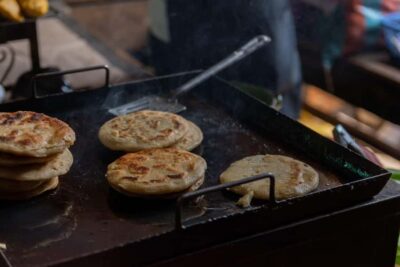 ★ 4.8Antigua Guatemala: Street Food Walking Tour with TastingsFrom $6887 reviews
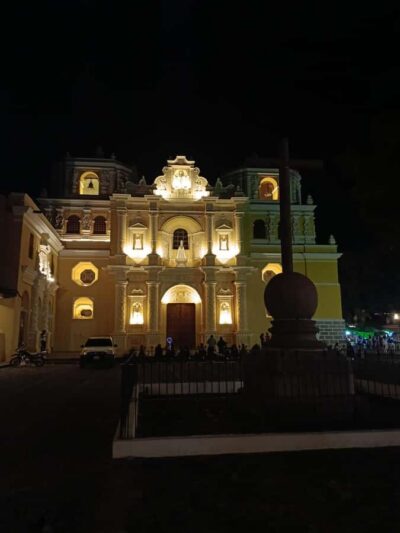 ★ 4.9La Antigua Horror Stories Night Walking TourFrom $2574 reviews
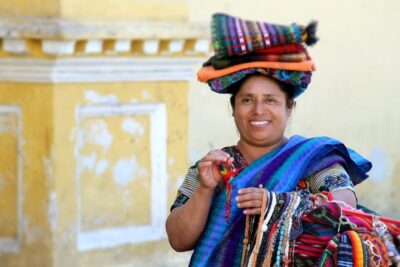 ★ 4.5Private Walking tour of Antigua GuatemalaFrom $3640 reviews
 ★ 5.0Antigua Walking Tour Morning and AfternoonFrom $2739 reviews
 ★ 4.8Walk Antigua Like a LocalFrom $3529 reviews
Also on these pages